
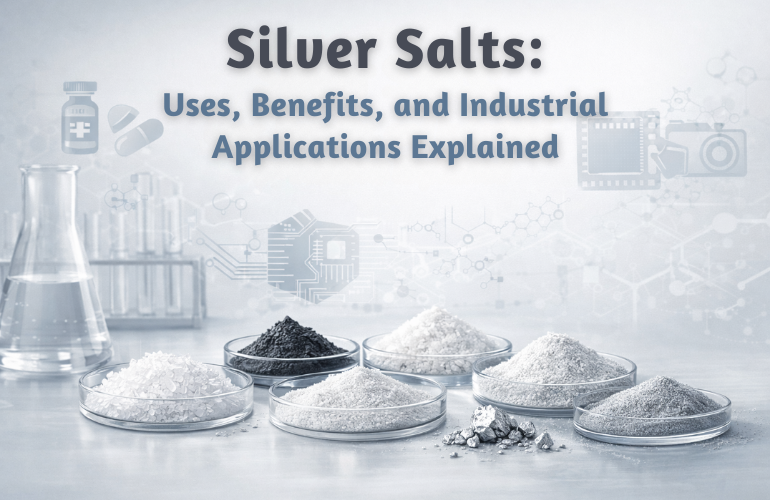
What Are Silver Salts? Meaning, Types, and Industrial Uses
When we think of silver, we often picture shimmering jewelry or fine coins. However, in the world of industrial chemistry, silver takes on a much more versatile form: silver salts. These chemical compounds are the backbone of numerous high-tech applications, from the medicine in your first-aid kit to the high-performance batteries powering modern electronics.
For manufacturers, pharmaceutical researchers, and industrial buyers in India, understanding the nuances of these compounds is essential. Whether you are looking for a reliable silver nitrate supplier or need to understand the conductivity of silver metal powder, this overview covers everything you need to know about these critical chemical building blocks.
What Are Silver Salts?
In simple terms, a silver salt is a chemical compound where silver atoms have lost an electron to become positively charged ions (Ag⁺), which then bond with negatively charged ions. While metallic silver is stable and unreactive in its solid form, silver salts are designed to be reactive and functional in specific environments.
The chemical composition typically involves the silver ion (Ag⁺) paired with an anion like nitrate, chloride, or sulphate. Unlike the bulk metal, these salts often come in the form of crystals or powders, making them easy to dissolve or mix into industrial formulations. This ionic nature is exactly what makes them so chemically useful; they can release silver ions into a solution, which is a key requirement for processes like electroplating or microbial control.
Chemical Properties of Silver Salts
Silver salts are prized in the industrial sector because of several unique characteristics:
- Light Sensitivity: Many silver compounds, especially halides like silver chloride, react when exposed to light. This was the founding principle of traditional photography and remains vital in certain specialized imaging technologies.
- Solubility Behavior: Depending on the anion, a silver salt can be highly soluble (like silver nitrate) or almost entirely insoluble (like silver chloride). This allows manufacturers to choose the exact compound that fits their liquid or solid-state processes.
- Antimicrobial Action: Silver ions are naturally toxic to bacteria and fungi but safe for many industrial uses. This makes them a top choice for medical coatings and water treatment.
- Reactivity: These compounds act as powerful intermediates in chemical synthesis, helping to create other complex molecules in laboratory settings.
At Pheonix Industries, we emphasize controlled manufacturing because even tiny impurities can alter these properties, potentially ruining a high-stakes industrial batch.
Types of Silver Salts
As a leading silver nitrate manufacture expert in India, we produce several distinct grades of silver compounds, each tailored for specific professional needs.
Silver Nitrate (AgNO₃)
Often called the most versatile silver compound, silver nitrate is highly soluble in water. It is the primary starting point for creating other silver resins and salts. If you are looking to buy silver nitrate online for laboratory or industrial use, you are likely looking for this “workhorse” chemical.
Silver Chloride (AgCl)
Known for its white, crystalline appearance, silver chloride is famous for its low solubility. It is widely used in making silver-ion electrodes and in the production of antimicrobial glass and bandages.
Silver Sulphate (Ag₂SO₄)
As a reputable silver sulphate supplier, we provide this compound primarily for analytical chemistry. It is used in testing for chemical oxygen demand (COD) and plays a role in certain electroplating baths where a non-chloride source of silver is required.
Silver Oxide (Ag₂O)
This black-brown powder is a staple in the energy sector. Silver oxide powder is the active material in silver-oxide batteries, which offer high energy density for small devices like hearing aids and watches.
Silver Metal Powder (Ag)
While technically a pure element, silver metal powder is often categorized with salts in industrial sourcing. It is valued for its unmatched electrical conductivity. As a silver metal powder supplier, we see this used extensively in conductive inks and electronics manufacturing across India.
Industrial Uses of Silver Salts
The applications for these materials are vast, reaching into almost every modern sector.
Pharmaceutical & Healthcare Industry
Silver salts are essential in modern medicine. Silver nitrate is used in cauterizing wounds and in the synthesis of Active Pharmaceutical Ingredients (APIs). Its antimicrobial properties make it a go-to for preventing infections in burn victims and in medical devices.
Chemical Manufacturing
In the world of high-end chemistry, silver salts act as catalysts. They speed up reactions that would otherwise be too slow or expensive, serving as critical intermediates in the creation of specialty chemicals.
Electroplating & Surface Treatment
To give base metals the conductivity and corrosion resistance of silver, industries use electroplating. By using high-purity silver nitrate or chloride, manufacturers can deposit a thin, even layer of silver onto everything from electrical connectors to decorative items.
Electronics & Battery Manufacturing
From the conductive traces on a circuit board to the long-lasting cells in silver-oxide batteries, these compounds keep the world connected. Silver metal powder is particularly vital here for creating conductive pastes.
Importance of High-Purity Silver Salts in Industry
In industrial chemistry, the difference between 99% purity and 99.9% purity is monumental. Impurities can cause unintended side reactions, reduce the efficiency of a battery, or lead to “spotting” in mirror manufacturing.
When you check the silver nitrate price per kg or the silver sulphate price, it is important to remember that you aren’t just paying for the silver—you are paying for the rigorous quality control and the expertise of the manufacturer. High-purity salts ensure consistent results, reducing waste and protecting your bottom line.
Storage, Handling, and Safety Guidelines
Because many silver salts are light-sensitive and reactive, proper storage is non-negotiable.
- Light Protection: Compounds like silver nitrate should be stored in amber-colored glass or opaque containers to prevent decomposition.
- Packaging Standards: At Pheonix Industries, we use industrial-grade packaging to ensure no moisture enters the product during transit.
- Safe Handling: While useful, these chemicals can be corrosive or staining. Always use appropriate PPE (gloves and goggles) and ensure compliance with local environmental regulations in India.
How to Choose the Right Silver Salt Supplier
Selecting a partner for your chemical supply is a strategic decision. Look for:
- Manufacturing Expertise: Does the supplier have a track record? Pheonix Industries has been a trusted name since 2006.
- Quality Standards: Ensure the supplier provides Certificates of Analysis (CoA) for every batch.
- Customization: Can they provide different grades (AR, LR, or ACS)?
- Consistency: Industrial processes require the same quality in every shipment to avoid recalibrating machinery.
Where Can You Get High-Quality Silver Salts in India?
If you are looking to buy silver nitrate online or need a bulk silver nitrate suppliers in India, Pheonix Industries is your premier partner. Based in Ahmedabad, Gujarat, we specialize in high-purity silver compounds tailored for the pharmaceutical, electronic, and chemical industries.
We offer custom packaging and technical support to ensure you get the exact chemical grade your application requires.
👉 Contact Pheonix Industries Today for a Quote
Frequently Asked Questions (FAQs)
Q. What are silver salts used for?
Ans. They are used in pharmaceutical synthesis, silver-oxide battery production, electroplating, water purification, and as analytical reagents in laboratories.
Q. Which silver salt is most commonly used in industry?
Ans. Silver nitrate (AgNO₃) is the most widely used due to its high solubility and its role as a precursor to almost all other silver compounds.
Q. Are silver salts safe to handle?
Ans. They should be handled with care. Many, like silver nitrate, can cause skin stains or irritation. Always follow safety data sheets (SDS) and wear protective gear.
Q. Can silver salts be customized for specific applications?
Ans. Yes. At Pheonix Industries, we can adjust purity levels, particle sizes, and grades (such as Analytical Reagent or Industrial Grade) to meet your specific manufacturing needs.